



SANTYL Ointment is an FDA-approved prescription medicine that removes dead tissue from wounds so they can start to heal. Proper wound care management is important to help remove non-living tissue from your wound. Healthcare professionals have prescribed SANTYL Ointment for more than 50 years to help clean many types of wounds.
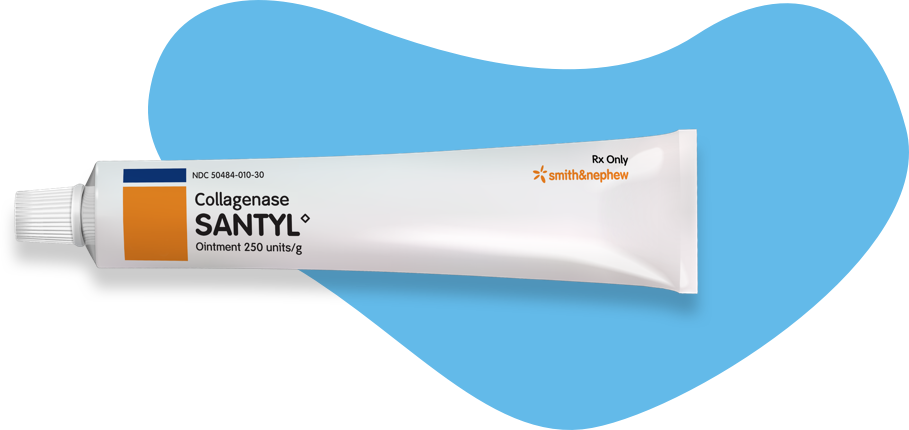
See how simple it is to apply SANTYL Ointment
Step-by-step application
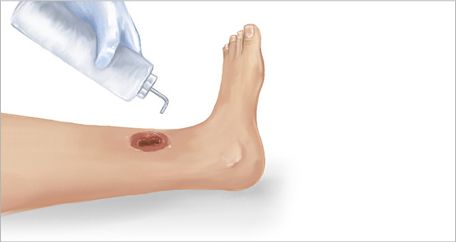
1. Moisture balance
- Wounds with sufficient moisture will naturally activate collagenase enzyme
- Wounds heal better in a moist environment
- Nerve endings are protected by moisture24
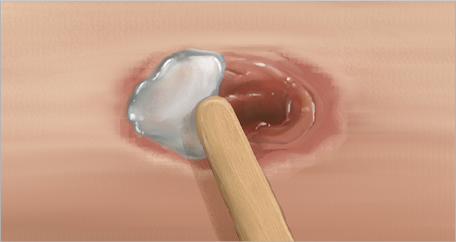
2. Edge to edge
- Apply SANTYL Ointment out to the edges of the wound
- New epithelial and granulation tissue grows from the wound’s edges
- Take care not to extend beyond the wound surface although it does not harm healthy tissue
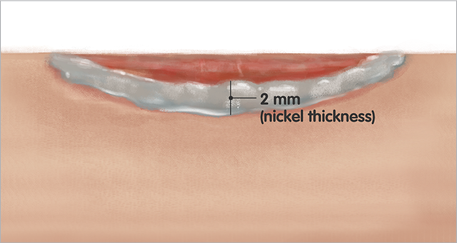
3. Nickel thickness
- Apply once daily at 2mm thickness or about the thickness of a nickel
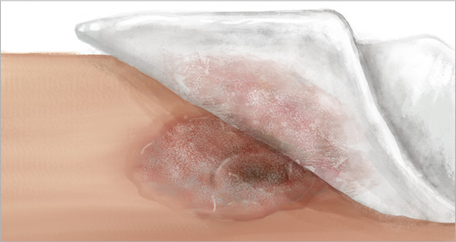
4. Daily dressing change
- Daily dressing changes help remove necrotic burden from wound area to help advance the healing process4
- Moisturize cover dressing with saline if wound is dry and there is no sufficient exudate
- The enzymatic action of SANTYL Ointment may be decreased by dressings containing iodine (I2) and some, but not all, dressings containing silver (Ag)
A few simple facts to get you started with the Copay Assistance Program
Who is eligible to save?*
If you’ve been prescribed Collagenase SANTYL Ointment and pay more than $50 out of pocket for your prescription, whether you’re insured or not, you may be eligible to save. Participants in government healthcare programs or where copay assistance is taxed, restricted, or otherwise prohibited by law are not eligible.
Just how much will I save?*
Eligible recipients will pay the first $50; Smith+Nephew will pay the remaining out-of-pocket cost up to the next $250.* The card can be used for six prescription fills, up to a $1000 maximum, each year.
How does it work?*
Click the print card button to start printing your Copay Assistance Program card. Then, just give the printed card to your pharmacist, along with your insurance card (if you have one) and a valid prescription for SANTYL Ointment. If eligible, the amount you receive from the program will be subtracted from what you pay your pharmacy.
FAQs
What is Collagenase SANTYL Ointment?
SANTYL Ointment is a FDA-approved enzymatic debrider that removes dead tissue from wounds so they can start to heal.
Who should NOT use SANTYL Ointment?
- Do not use SANTYL Ointment if you are allergic or sensitive to collagenase or any other ingredient in this product
- Use this product only if it has been prescribed to you by your healthcare professional. Never share this medicine with another person, and use SANTYL Ointment only for the condition for which it was prescribed
- Keep SANTYL Ointment and all medicines out of the reach of children
- Always use SANTYL Ointment as instructed by your healthcare professional and according to the instructions in the product packaging
What should I avoid while using SANTYL Ointment?
- Make sure to apply the ointment only to the wound. Take care not to extend beyond the wound surface although it does not harm healthy tissue.
- Never use SANTYL Ointment in or around your eyes, mouth, or any unprotected orifice.
What is the right amount of SANTYL Ointment to apply?
Your healthcare professional will show you how much SANTYL Ointment your wound needs. Apply the correct amount as instructed by your healthcare professional, SANTYL Ointment should be applied directly to the wound bed with the thickness of a nickel (approximately 2mm), whenever possible.
Are there any side effects?
SANTYL Ointment is used to remove damaged tissue from chronic skin ulcers and severely burned areas. Do not use if you have shown hypersensitivity to collagenase. Occasional slight redness may occur if SANTYL Ointment is placed outside the wound area. Precautions should be taken to avoid detergents or cleansing solutions that are acidic or basic in nature, as raising or lowering of the Ointment’s pH can lower the effectiveness. Caregivers to debilitated patients should closely monitor the application site to ensure that the area is not becoming infected. The risk information provided herein is not comprehensive. To learn more, talk about SANTYL with your health care provider. The FDA-approved product labeling can be found at https://www.santyl.com/.
How should I store SANTYL Ointment?
Do not refrigerate SANTYL Ointment or expose it to heat. Store SANTYL Ointment at room temperature (no higher than 25°C or 77°F).
As with all medications, keep out of the reach of children.
Where can I get more information?
Ask your healthcare professional or pharmacist right away if you have any other questions or need additional information about SANTYL Ointment. It is also a good idea to read the product packaging every time you get a refill, to remind you of the right way to use the medicine.
Getting the most out of your Collagenase SANTYL Ointment prescription
Proper wound care is always important, but when you have a wound that won’t heal due to other medical conditions, like diabetes, it’s even more crucial. We’ve brought together some tools designed to make that easier.
- Cost concerns?
- If you’re commercially insured or pay out of pocket, copay assistance may be available. Click here to review the details.
- If you are covered by Medicare, have dual Medicare/Medicaid coverage, or are uninsured or underinsured, talk to your healthcare professional about prescription costs and savings
- For application instructions, watch our video
- Get answers to your common questions with our FAQ
- Read the package insert
Remember: It takes teamwork to help get your wound on the path to healing, so ask your healthcare professional or pharmacist right away if you have any other questions or need additional information about SANTYL Ointment.
- Anderson, K., & Hamm, R. L. (2014). Factors That Impair Wound Healing. The journal of the American College of Clinical Wound Specialists, 4(4), 84–91. doi:10.1016/j.jccw.2014.03.001
- Sheehan, P.J., Jones, P.E., Caselli, A., Giurini, J.M., & Veves, A. (2003). Percent change in wound area of diabetic foot ulcers over a 4-week period is a robust predictor of complete healing in a 12-week prospective trial. Diabetes care, 26 6, 1879-82.
- Järbrink K, Ni G, Sönnergren H, et al. Prevalence and incidence of chronic wounds and related complications: a protocol for a systematic review. Syst Rev. 2016;5:152.
- French M, Brown A, Van Wart HE. Identification of clostridium histolyticum collagenase hyperreactive sites in type I, II, III collagens: lack of correlation with local triple helical stability. J Protein Chem. 1992;11:83-95.
- Shah, J. M., Omar, E., Pai, D. R., & Sood, S. (2012). Cellular events and biomarkers of wound healing. Indian journal of plastic surgery : official publication of the Association of Plastic Surgeons of India, 45(2), 220–228. doi:10.4103/0970-0358.101282
- Schultz GS, Sibbald RG, Falanga V, et al. Wound bed preparation: a systematic approach to wound management. Wound Repair Regen. 2003;11(Suppl 1):S1-S8.
- Kim M, Hamilton S, Guddat L, Overall C. Plant collagenase: unique collagenolytic activity of cysteine proteases from ginger. Biochim Biophys Acta. 2007;1770:1627-1635.
- Herman, I. Stimulation of human keratinocyte migration and proliferation in vitro: insights into the cellular responses to injury and wound healing. Wounds. 1996; 8:33-40.
- Riley et al. Collagenase promotes the cellular responses to injury and wound healing in vivo. J Burns Wounds. 2005; 4:112-124.
- Shi et al. Degradation of human collagen isoforms by Clostridium collagenase and the effects of degradation products on cell migration. Int Wound J. 2010; 7: 87-95.
- Sheets AR, Demidova-Rice TN, Shi L, Ronfard V, Grover KV, Herman IM (2016) Identification and Characterization of Novel Matrix-Derived Bioactive Peptides: A Role for Collagenase from Santyl® Ointment in Post-Debridement Wound Healing? PLoS ONE 11(7): e0159598.
- Motley TA, Lange DL, Dickerson JE, Slade HB. Clinical outcomes associated with serial sharp debridement of diabetic foot ulcers with and without clostridial collagenase ointment. Wounds. 2014;26:57-64.
- Jimenez JC, Agnew PS, Mayer P, et al. Enzymatic debridement of chronic non-ischemic diabetic foot ulcers: results of a randomized, controlled trial. Wounds. 2017;29:133-139.
- Tallis A, Motley TA, Wunderlich RP, Dickerson JE Jr, Waycaster C, Slade HB. Clinical and economic assessment of diabetic foot ulcer debridement with collagenase: results of a randomized controlled study. Clin Ther. 2013;35:1805-1820.
- Data on fi le. CSR 017-101-09-035. Smith & Nephew, Inc. 2017.
- Jovanovic A, Ermis R, Mewaldt R, Shi L, Carson D. The influence of metal salts, surfactants, and wound care products on enzymatic activity of collagenase, the wound debriding enzyme. Wounds. 2012;24:242-253.
- Motley, T. A., Caporusso, J. M., Lange, D. L., Eichelkraut, R. A., Cargill, D. I., & Dickerson, J. E., Jr (2018). Clinical Outcomes for Diabetic Foot Ulcers Treated with Clostridial Collagenase Ointment or with a Product Containing Silver. Advances in wound care, 7(10), 339–348. doi:10.1089/wound.2018.0784
- Dreyfus J, Delhougne G, James R, Gayle J, Waycaster C. Clostridial collagenase ointment and medicinal honey utilization for pressure ulcers in U.S. Hospitals. J Med Econ. 2018;21:390-397
- Mearns ES, Liang M, Limone BL, et al. Economic analysis and budget impact of clostridial collagenase ointment compared with medicinal honey for treatment of pressure ulcers in the US. Clinicoecon Outcomes Res. 2017;9:485-494.
- Waycaster C, Carter MJ, Gilligan AM, Mearns ES, Fife CE, Milne CT. Comparative cost and clinical effectiveness of clostridial collagenase ointment for chronic dermal ulcers. J Comp Eff Res. 2018;7:149-165.
- Gilligan AM, Waycaster CR, Bizier R, Chu BC, Carter MJ, Fife CE. Comparative effectiveness of clostridial collagenase ointment to medicinal honey for treatment of pressure ulcers. Adv Wound Care (New Rochelle). 2017;6:125-134.
- Milne CT, Ciccarelli AO, Lassy M. A comparison of collagenase to hydrogel dressings in wound debridement. Wounds. 2010;22:270-274.
- In accordance with USP standards and guidelines and data on file.
- Leaper DJ, Schultz G, Carville K, et al. Extending the TIME concept: what have we learned in the past 10 years? IntWound J. 2012;9(Suppl2):1-19.
- Data on file. Smith & Nephew, Inc. 2018.
- Lehrman, J, Patel A, Delhougne, J. Health Care Spending in Patients With Stage 3 and Stage 4 Pressure Injuries and Patients With Diabetic Foot Ulcers Treated Early With Clostridial Collagenase Ointment: A Retrospective Data Review. Wounds. 2020;32(8):228–236.
- Baum, C.L. and Arpey, C.J. Normal cutaneous wound healing: Clinical correlation with cellular and molecular events. Dermatologic Surgery, 2005; 31: 674-686.
- Apelqvist J, Larsson J. What is the most effective way to reduce incidence of amputation in the diabetic foot? Diabetes Metab Res Rev. 2000;16(S1):S75-S83.
- Driver VR, Fabbi M, Lavery LA, Gibbons G. The costs of diabetic foot: the economic case for the limb salvage team. J Am Podiatr Med Assoc. 2010;100(5):335-341.
- Weiss AJ (Truven Health Analytics), Elixhauser A (AHRQ), Steiner C (AHRQ). Readmissions to U.S. Hospitals by Procedure, 2010. HCUP Statistical Brief #154. April 2013. Agency for Healthcare Research and Quality, Rockville, MD. http://www.hcup-us.ahrq.gov/reports/statbriefs/sb154.pdf.
- Collagenase SANTYL Ointment [prescribing information]. Fort Worth, TX: Smith & Nephew, Inc.; 2016.
- Enoch S, Harding K. Wound bed preparation: the science behind the removal of barriers to healing. Wounds. 2003;15:213-229.
- Shi L, Carson D. Collagenase Santyl ointment: a selective agent for wound debridement. J Wound Ostomy Continence Nurs. 2009;36(6 Suppl):S12-S16. doi:10.1097/WON.0b013e3181bfdd1a
- Hansbrough JF, Achauer B, Dawson J et al. Wound healing in partial-thickness burn wounds treated with collagenase ointment versus silver sulfadiazine cream. J. Burn Care Rehabil. 16(3 Pt 1), 241–247 (1995).
- Ostlie DJ, Juang D, Aguayo P et al. Topical silver sulfadiazine vs collagenase ointment for the treatment of partial thickness burns in children: a prospective randomized trial. J. Pediatr. Surg. 47(6), 1204–1207 (2012).
- Frye K, Luterman A. Decreased incidence of hypertrophic burn scar formation with the use of collagenase, an enzymatic debriding agent. Wounds 17(12), 332–336 (2005).
- Ozcan C, Ergun O, Celik A, Corduk N, Ozok G. Enzymatic debridement of burn wound with collagenase in children with partial-thickness burns. Burns 28(8), 791–794 (2002).
- Galperin RC, Lange DL, Ramsay SJ et al. Anti-inflammatory effects of clostridial collagenase results from in vitro and clinical studies. J. Am. Podiatr. Med. Assoc. 105(6), 509–519 (2015).
- Carter MJ, Gilligan AM, Waycaster CR, Fife CE. Treating pressure ulcers with clostridial collagenase ointment: results from the US Wound Registry. Wound Repair Regen. 24(5), 904–912 (2016).
- McCallon SK, Frilot C. A retrospective study of the effects of clostridial collagenase ointment and negative pressure wound therapy for the treatment of chronic pressure ulcers. Wounds 27(3), 44–53 (2015).
- Waycaster C, Milne CT. Clinical and economic benefit of enzymatic debridement of pressure ulcers compared with autolytic debridement with a hydrogel dressing. J. Med. Econ. 16(7), 976–986 (2013).
- Carter MJ, Gilligan AM, Waycaster CR, Schaum K, Fife CE. Cost effectiveness of adding clostridial collagenase ointment to selective debridement in individuals with stage IV pressure ulcers. J. Med. Econ. 20(3), 253–265 (2017).
- Motley TA, Gilligan AM, Lange DL, Waycaster CR, Dickerson JE Jr. Cost-effectiveness of clostridial collagenase ointment on wound closure in patients with diabetic foot ulcers: economic analysis of results from a multicenter, randomized, open-label trial. J. Foot Ankle Res. 8, 7 (2015).
- Falanga V, Brem H, Ennis WJ, Wolcott R, Gould LJ, Ayello EA. Maintenance debridement in the treatment of difficult-to-heal chronic wounds. Recommendations of an expert panel. Ostomy Wound Manage. 2008;Suppl:2-15.
- Milne CT et al. A comparison of collagenase to hydrogel dressings in maintenance debridement and wound closure. Wounds, 2012; 24(11):317–322.
- Waycaster C et al. Pressure ulcer treatment in a long-term care setting: wound bed healing with clostridial collagenase ointment versus hydrogel dressing. Chronic Wound Care Manage Res, 2014; 1: 49–56.
- Gilligan AM et al. Comparative effectiveness of clostridial collagenase ointment to medicinal honey for treatment of venous leg ulcers in outpatient care settings. Presented at: 7th Annual SAWC, Sept. 2015; 26–28.
- Gilligan AM, Waycaster C, Carter MJ, Fife CE. Collagenase ointment for the treatment of venous leg ulcers in outpatient care settings. Presented at: ISPOR 20th Annual International Meeting, May 2015; 16–20.
- Frederick RE, Bearden R, Jovanovic A, Jacobson N, Sood R, Dhall S. Clostridium Collagenase Impact on Zone of Stasis Stabilization and Transition to Healthy Tissue in Burns. Int J Mol Sci. 2021;22(16):8643. Published 2021 Aug 11. doi:10.3390/ijms22168643
- Shupp JW, Nasabzadeh TJ, Rosenthal DS, Jordan MH, Fidler P, Jeng JC. A review of the local pathophysiologic bases of burn wound progression. J Burn Care Res. 2010;31(6):849-873. doi:10.1097/BCR.0b013e3181f93571.
- Gravante G, Filingeri V, Delogu D, et al. Apoptotic cell death in deep partial thickness burns by coexpression analysis of TUNEL and Fas. Surgery. 2006;139(6):854-855. doi:10.1016/j.surg.2006.01.024.
- Gravante G, Palmieri MB, Esposito G, et al. Apoptotic death in deep partial thickness burns vs. normal skin of burned patients. J Surg Res. 2007;141(2):141-145. doi:10.1016/j.jss.2006.07.031.
- Khan AA, Rawlins J, Shenton AF, Sharpe DT. The Bradford Burn Study: the epidemiology of burns presenting to an inner city emergency department. Emerg Med J. 2007;24(8):564-566. doi:10.1136/emj.2005.027730
- Hettiaratchy S, Dziewulski P. ABC of burns: pathophysiology and types of burns [published correction appears in BMJ. 2004 Jul 17;329(7458):148]. BMJ. 2004;328(7453):1427-1429. doi:10.1136/bmj.328.7453.1427.
- Salibian AA, Rosario ATD, Severo LAM, et al. Current concepts on burn wound conversion-A review of recent advances in understanding the secondary progressions of burns. Burns. 2016;42(5):1025-1035. doi:10.1016/j.burns.2015.11.007